McLean VA Luxury Home Styles and What Sets Them Apart
June 25, 2026
June 25, 2026
If you have ever scrolled through McLean luxury listings and wondered why two homes with similar price points feel completely different, architecture is usually the reason. In McLean, style is not just about curb appeal. It shapes how a home lives, how private it feels, and how well it fits the lot.
For buyers and sellers alike, understanding these style cues can help you read the market with more confidence. You can better spot what drives value, what fits your lifestyle, and what makes one property stand out from another. Let’s dive in.
McLean sits in a luxury segment where architecture and site planning carry real weight. U.S. Census QuickFacts reports an 86.1% owner-occupied housing rate and a median owner-occupied home value of $1,412,700. That helps explain why buyers here often look beyond square footage and focus closely on design, privacy, and long-term livability.
Fairfax County planning materials describe the McLean Planning District as a stable, low-density residential area. The western portions include large-lot development at 2 acres and estate development at 5 acres or more. At the same time, the McLean Community Business Center is a separate 230-acre redevelopment focus around Chain Bridge Road and Old Dominion Drive, which helps explain why the market includes both estate properties and newer infill or rebuild homes.
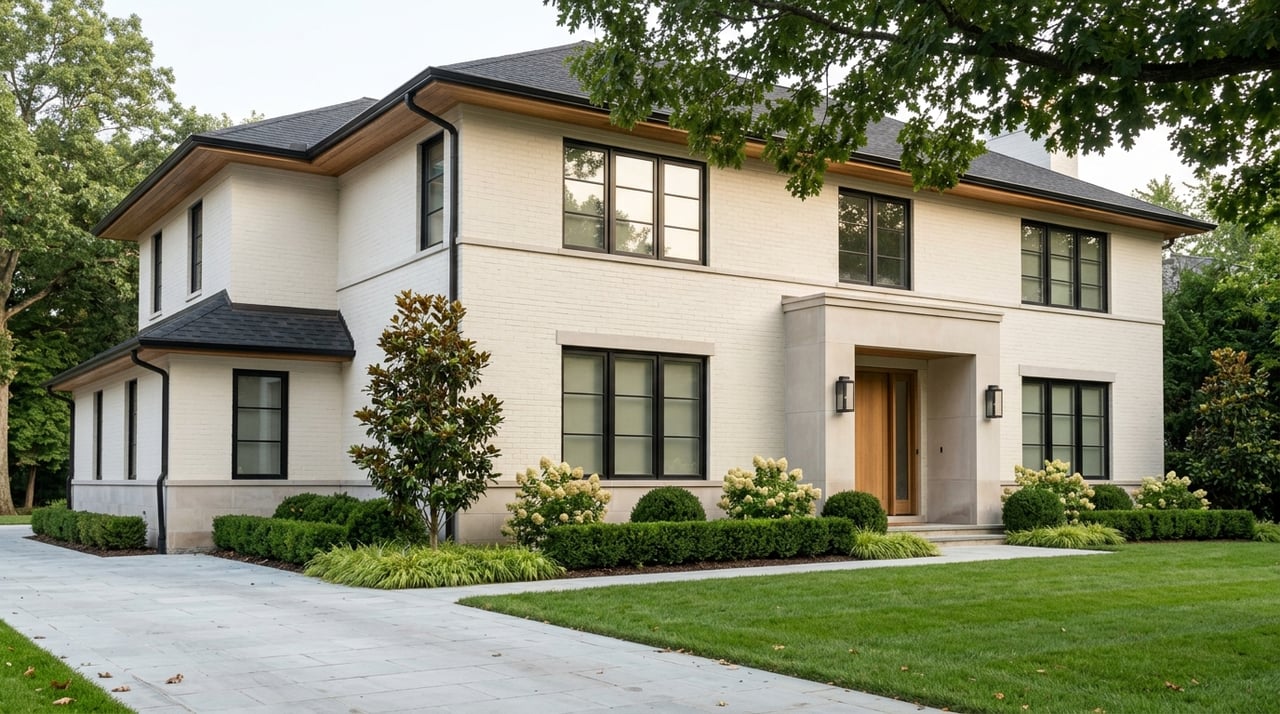
Among McLean luxury homes, Colonial and Colonial Revival remain some of the most recognizable styles. In this market, the term usually points to a modern interpretation of classic American architecture rather than a strict period copy. You will often see symmetry, balanced window placement, formal front entries, and a composed, traditional façade.
According to the National Park Service, Colonial Revival architecture often draws from Georgian and Federal precedent. Common features include hipped roofs, fan or Palladian windows, double-hung windows, simple columns or pilasters, and prominent porches. These details still resonate in McLean because they communicate formality, order, and timeless appeal.
Inside, the layout often matters just as much as the exterior. Britannica notes that Georgian interiors commonly used central halls, and that pattern shows up clearly in McLean. A center-hall colonial plan, with living and dining rooms flanking the entry, still signals a more traditional arrangement even when the home has been updated for modern use.
For you as a buyer, this style often suits households that want clear room definition and a more formal entertaining flow. For you as a seller, a Colonial home’s value often comes from how well it balances classic structure with updated kitchens, family rooms, and outdoor living spaces.
In McLean listings, “Colonial” often suggests:
If Colonial homes reflect formality, contemporary and transitional homes usually lean toward openness and flexibility. These styles are especially common in newer McLean construction. They often appeal to buyers who want modern daily function without giving up a sense of scale or presence.
The National Park Service describes contemporary houses as featuring open floor plans, large windows or glass walls, reduced front ornament, and strong indoor-outdoor continuity. In McLean, the term “transitional” often bridges old and new. You may see a home with traditional exterior massing paired with modern interiors, cleaner finishes, and a more connected layout.
This is a major theme in current luxury inventory. Many newer homes center daily life around a large kitchen-family room space, often with oversized islands, butler’s pantries, mudrooms, main-level offices, elevators, and walkout lower levels. The result is a plan that tends to feel adaptable, especially for households that want multi-use spaces rather than a strict divide between formal and informal rooms.
For buyers, these homes often feel move-in ready because their layout already reflects how many people live today. For sellers, transitional and contemporary design can attract strong interest when the architecture, finish quality, and lot design feel cohesive.
In McLean listings, “transitional” often means:
In McLean listings, “contemporary” often points to:
Tudor homes bring a different kind of presence to the McLean luxury market. They often feel especially at home on wooded lots, quiet streets, or more secluded settings. In many cases, the style works best when the site itself supports a private, layered arrival experience.
In McLean, Tudor can mean an older English-inspired house or a newer “Modern Tudor” interpretation. The newer version often keeps the steep rooflines and textured material palette that buyers associate with Tudor design, while opening up the interior for a more current lifestyle. That mix of old-world character and modern function gives the style broad appeal.
A useful clue in this category is how the home separates daily living from entertaining. Some Tudor and larger estate homes divide the layout into formal and informal wings, which can make a large house feel more organized. If you want a home that supports both gatherings and quieter day-to-day routines, that distinction can be very practical.
At the highest end of the market, McLean often features European-inspired estates with labels like French Colonial, French Château, and Tuscan-inspired. These homes typically signal scale, privacy, and a more formal luxury experience. They are often paired with larger lots and more elaborate grounds.
In practical terms, these properties tend to emphasize arrival and retreat. Long driveways, gated entrances, formal entertaining rooms, terraces, pools, and landscaped outdoor areas often matter as much as the architecture itself. The style language tells you that the home is designed not only to look impressive, but also to create a full estate setting.
For buyers, these homes can offer a more immersive luxury lifestyle. For sellers, their positioning usually depends on more than square footage. The site, approach, privacy, and amenity package all shape how the market perceives value.
One of the most important things to understand about McLean luxury homes is that architectural style and lot size work together. Recent listings show a wide range, from roughly 0.25 to 0.31-acre new construction lots to parcels of 1.4 acres, 1.9 acres, 3.1 acres, and 5 acres or more. That range gives buyers very different living experiences, even within the same town.
A grand Colonial on multiple acres will feel very different from a sleek transitional home on an infill lot closer to the community business center. Neither is automatically better. The right fit depends on whether you value land, proximity, architectural presence, newer construction, or a specific balance of those factors.
For sellers, this is why style alone does not tell the whole story. A home’s lot context can either amplify or limit the impact of its architecture. In McLean, luxury buyers are often evaluating both at the same time.
In McLean, privacy is not only about acreage. It is often created through smart site planning. A smaller lot can still feel secluded when it backs to open green space, sits on a cul-de-sac, includes mature landscaping, or is set back from the street.
This is one of the most useful ways to read a listing. Mentions of pipe-stem courts, gated drives, wooded views, side-load garages, setbacks, and tree buffers can be just as important as the home’s style label. Those cues help explain why one property feels calm and sheltered while another feels more exposed.
If you are buying, pay attention to how the home sits on the lot and how you approach it from the street. If you are selling, those same site details may deserve as much attention in marketing as the architecture itself.
McLean’s luxury styles also differ in how they organize interior space. Colonial homes often preserve a visible formal structure, even after major renovation. You may still see a central hall, defined living and dining rooms, and a more traditional sequence of spaces.
Contemporary and transitional homes usually put daily life at the center of one large gathering area. Kitchens connect more directly to family rooms, and lower levels often expand the lifestyle offering with recreation rooms, gyms, theaters, or guest space. These homes tend to feel more fluid and less compartmentalized.
Estate homes, larger Tudors, and European-inspired houses often prioritize both entertaining and retreat. You may see outdoor terraces, resort-style grounds, generous primary suites, and layouts that separate public-facing rooms from quieter private areas. That can be a strong advantage if you want a house that handles different uses without compromise.
Real estate style terms can be helpful, but they are still shorthand. In McLean, the most useful question is not just what a home is called. It is how that style works with the lot, the approach, and the way you will actually live in the space.
Here is a quick way to think about common labels:
| Style label | What it often suggests |
|---|---|
| Colonial | Symmetry, center-hall logic, traditional façade, formal rooms |
| Transitional | Traditional exterior influence with a more open modern plan |
| Contemporary | Glass, openness, simplified detailing, indoor-outdoor flow |
| Tudor | Character-driven exterior with potential separation of formal and informal areas |
| Estate | More acreage, greater privacy, and a broader amenity package |
If you are comparing homes in McLean, it helps to look beyond finishes and staging. Ask how the style affects circulation, privacy, entertaining, and the relationship to the land. That is often what separates a home that simply looks luxurious from one that truly lives well.
Whether you are preparing to buy or planning to position a home for sale, understanding these architectural patterns can give you a sharper read on McLean’s luxury market. For tailored guidance on McLean homes, private placements, and strategic representation, connect with Nelson Marban.
Get assistance in determining current property value, preparing your property for sale, crafting a competitive offer, negotiating a contract, and much more. Contact me today.