Arlington New vs Historic Homes: Which Fits You?
May 21, 2026
May 21, 2026
Wondering whether Arlington’s newer condos and townhomes or its older character-filled homes are the better fit for your next move? In Arlington, that choice is especially important because the housing stock is not evenly split between the two. If you understand how the county is built, where new development is concentrated, and what ownership can look like in older areas, you can make a much more confident decision. Let’s dive in.
Arlington is a compact, built-out county with about 127,090 housing units, and 73% of those units are multifamily apartments or condos. Since 2020, 99% of net new housing has come from multifamily apartments and condos. That means the choice between new and historic homes in Arlington is often less about two equal sides of the market and more about two very different lifestyles.
In practical terms, newer options are usually concentrated in Arlington’s transit corridors, while older homes are more often found in established residential neighborhoods. If you are deciding between the two, it helps to think about how you want to live day to day, not just what style of home you prefer.
Arlington’s planning framework focuses higher-density development along transit corridors, generally within a quarter-mile of Metro station entrances. The county notes that 63% of residents live in planning corridors that cover just 23% of the land. This pattern shapes where you are most likely to find newer housing options.
Rosslyn stands out as Arlington’s clearest new-construction hub. The Rosslyn Metro Station Area has more than 6,000 residences within a 10-minute walk of Metro, including high-rise apartment and condominium buildings, older smaller buildings, and newer luxury townhouses.
The county describes Rosslyn as a gateway district shaped by sector plans intended to create a first-class urban center with strong architecture and urban design. If you want a modern home with a highly urban setting and close transit access, Rosslyn is often one of the first places to consider.
Pentagon City is another key area for newer homes. Arlington identifies it as a transit-oriented development example, with a mix of housing types near one of the system’s busiest Metro stations and within an active planning area.
Crystal City and Pentagon City are also guided by plans calling for a more walkable, transit-oriented corridor, additional housing options, and 7,500 new homes in the plan framework. For buyers drawn to newer buildings, upgraded public spaces, and convenience-focused living, this corridor often aligns well with those priorities.
The Rosslyn-Ballston corridor remains one of the county’s defining development patterns. Arlington concentrates its highest-density development around Rosslyn, Courthouse, Clarendon, Virginia Square, and Ballston, generally close to Metro entrances.
If your ideal home includes elevator access, contemporary finishes, and an easy commute pattern, these station areas are often where your search will naturally focus.
One of the biggest advantages of newer homes is a stronger baseline for building performance. The U.S. Department of Energy notes that efficient new homes are built to rigorous standards for energy savings, comfort, health, and durability, with third-party verification in qualifying programs.
DOE also notes that many older homes have less insulation than homes built today. In a market like Arlington, where much of the new supply is apartment and condo product, that often translates into newer systems, more predictable energy performance, and a lower-maintenance starting point.
For many buyers, that means fewer immediate projects after closing. If you prefer a more turnkey experience, newer construction can feel simpler and more predictable from day one.
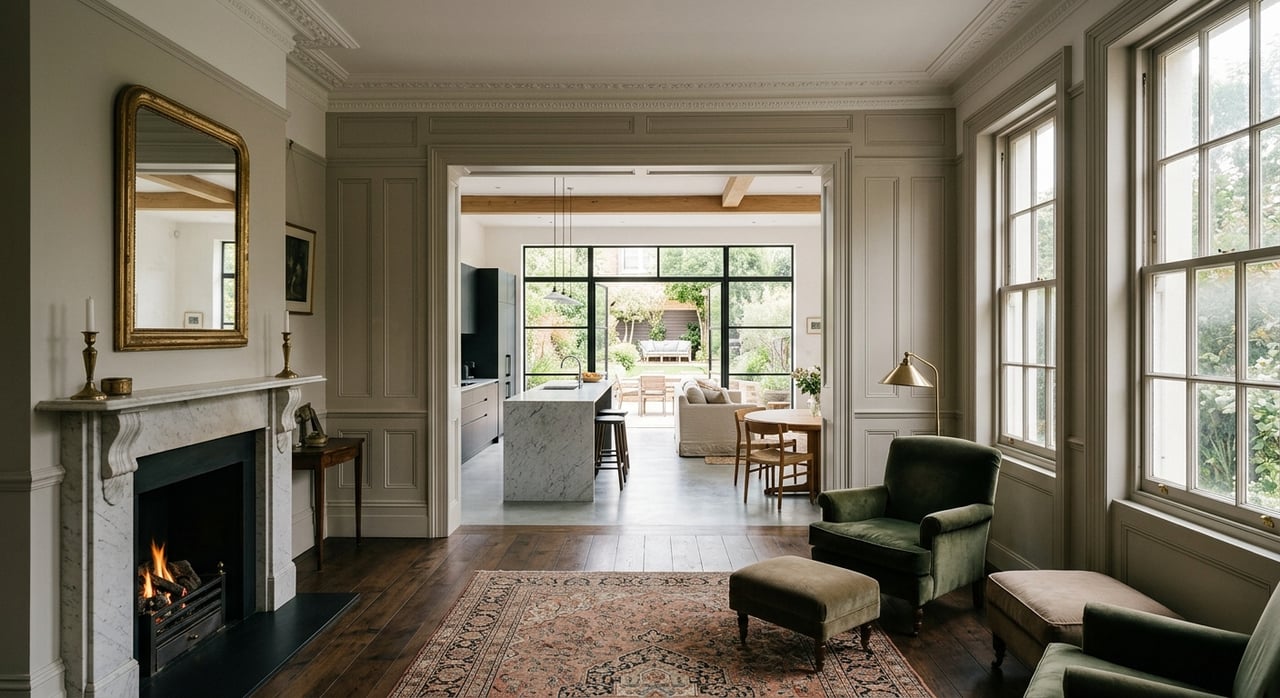
If newer homes tend to gather near transit corridors, Arlington’s older and historic homes tend to define many of its established neighborhoods. These areas often appeal to buyers who care about architecture, mature trees, porches, and a more layered streetscape.
Maywood is one of Arlington’s oldest residential districts, with homes built from 1909 to 1941. The county says the neighborhood includes Queen Anne, Colonial Revival, Craftsman, and Tudor Revival homes, along with front porches, gable roofs, mature trees, and abundant landscaping.
If you are drawn to visible craftsmanship and architectural detail, Maywood represents the kind of older Arlington housing stock that feels distinct from newer corridor development.
Lyon Park began as a bedroom community in 1919 and is largely composed of single-family homes. In its neighborhood conservation planning update, the county noted concerns about infill replacing older, smaller homes with much larger homes, as well as the loss of mature trees.
That context matters if you are comparing old and new. In neighborhoods like Lyon Park, you may find both preserved older homes and newer replacement homes, which can create a more varied streetscape and a wider range of property conditions.
Cherrydale developed rapidly after the courthouse moved to Arlington in 1898 and the commuter railroad arrived in 1906. Its historic district includes 829 single-family dwellings among 887 properties and is especially known for bungalows and mail-order houses.
For buyers who appreciate older neighborhood fabric and early residential design, Cherrydale offers a strong example of Arlington’s long-established housing character.
Arlington’s historic housing story is not limited to detached houses. The county also highlights garden-apartment communities such as Colonial Village, Buckingham Village, and Cambridge Courts.
These communities were planned as landscaped, low-rise settings with courtyards, greenbelts, and Colonial Revival or Georgian Revival styling. If you want historic character without committing to a detached home, this can be an appealing middle ground.
Historic or older homes can offer charm that newer homes may not match, but ownership can come with added considerations. In Arlington’s local historic districts, exterior work can trigger Certificate of Appropriateness review.
If a district does not have approved design guidelines, the county uses the Secretary of the Interior’s Standards to guide rehabilitation. Arlington also publishes style guides for some areas, showing that repairs, alterations, and rehabilitation may be treated with special care.
That does not mean historic ownership is a problem. It simply means you should understand the review process, permit expectations, and design constraints before you buy.
Older homes often need a different mindset when it comes to efficiency. DOE notes that many older homes have less insulation than homes built today, so efficiency improvements are often about retrofit work rather than starting with newer construction standards.
The National Park Service also emphasizes that energy-efficiency upgrades in historic buildings should protect important materials and character-defining features. In other words, improvements may be possible, but the approach usually needs to be more thoughtful and more tailored.
If you enjoy stewardship and do not mind planning improvements over time, that may feel worthwhile. If you want maximum convenience and fewer unknowns, newer construction may align better with your goals.
The best choice usually becomes clearer when you focus on your daily priorities.
Newer construction often makes the most sense if your priorities include:
In Arlington, that often points buyers toward Rosslyn, Pentagon City, Crystal City, and core Rosslyn-Ballston station areas.
An older or historic home may be the better fit if you care most about:
In Arlington, buyers with those priorities often start with neighborhoods such as Maywood, Lyon Park, Cherrydale, and other older central and north Arlington areas.
Some buyers want character without taking on a detached historic house. In that case, Arlington’s historic apartment communities or carefully designed infill can offer a blend of older neighborhood context and more updated living space.
The tradeoff is that exterior changes may involve more oversight, and the level of design flexibility may be more limited than in other settings.
In Arlington, the choice is usually not simply new versus old. It is more often corridor-based new construction versus established neighborhoods with preserved character.
If you want efficiency, transit access, and newer systems, you will likely spend more time looking in Arlington’s major corridors. If you want architectural detail, mature landscaping, and a more established streetscape, older neighborhoods will probably feel more compelling.
A thoughtful home search starts with matching the property type to the way you actually want to live. If you are weighing Arlington’s newer options against its historic homes, Nelson Marban can help you compare neighborhoods, property types, and tradeoffs with the kind of local guidance that makes the decision clearer.
Get assistance in determining current property value, preparing your property for sale, crafting a competitive offer, negotiating a contract, and much more. Contact me today.